
Turning Stuff Around

A blog about the grit, grind, and occasional glory of turnarounds.

Category: Personal Reflections

Posts covering personal musings and philosophical thoughts.

  • The “Work-From-Where?” Conundrum

    in

    The “Work-From-Where?” Conundrum

    The ongoing debate over remote work versus in-office has grown louder recently, with major corporations mandating a full-time return to office. Amazon, for example, is mandating a full-time return to the office starting in January, citing the benefits of in-person collaboration. Conversely, many employees and organizations advocate for the benefits of remote work, which offers access to a broader talent pool for employers, and flexibility, autonomy, and improved work-life balance for team members.

    Both models have pros and cons. So, what is the “right” approach? And given a turnaround situation, should a full-time work-from-office be mandated? The answer is: it depends.

    The success of any work model—remote, hybrid, or in-office—largely depends on one critical, defining factor: your organization’s culture. An organization’s culture is its DNA. It shapes how teams work, communicate, and innovate. Some cultures thrive on the energy of in-person brainstorming sessions, and the spontaneous “water cooler” chats. Others excel in an environment where flexibility reigns, and employees are trusted to deliver from wherever they’re most productive. In geographically dispersed organizations, you’ll often find micro-cultures that have their own idiosyncrasies: the team in Europe is different than the team in Latin America, and both are different than the team in Asia. Some teams prefer working from the office, while others enjoy a hybrid model.

    In a turnaround, culture becomes even more critical (though, I’d argue that culture is always critical, not just during a turnaround.) You’re not only trying to implement a work model; you’re trying to rebuild trust, create alignment, and drive collaboration and momentum. And remember, the organization you’re working to fix already has an established culture—the slate isn’t blank. In weighing the pros and cons of each model, you should consider how each approach will affect the culture (and in-turn — the bigger goals you’ve set.)

    At my company we opted for a hybrid model: three days in the office, two at home (we didn’t allow a work-from-anywhere model). And we were open to exceptions in different geographies. This worked well for both the business and the teams as we were able to align needs and requirements across our global operation. This included calling a full-time work-from-office when needed. (By the way, some teams chose themselves to work full-time in the office!)

    So what’s right for your organization? The question isn’t only about productivity—it’s about how the work model will influence, shape and evolve the organization’s culture. And, most importantly, whether that changed culture enables your goals and long-term plans. Ultimately, a successful turnaround depends on finding a model that creates a culture to help you deliver on your mission.

    Engage your team, listen to their needs, and tailor your approach accordingly. The right work model isn’t about following trends or making sweeping mandates—it’s about aligning your strategy with your people and enabling their success (which is ultimately yours).

    Tags:

    Share this post:

  • Doubt the Doubt

    in

    Doubt the Doubt

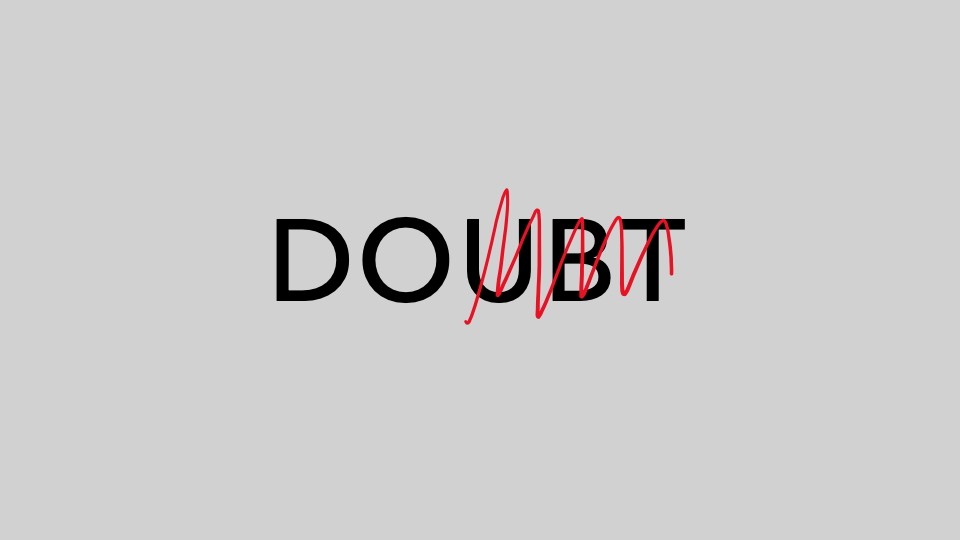
    Like in all major events, there’s a moment (actually, many moments) in every turnaround where self-doubt sneaks in. Usually uninvited. It’s that little voice in your head that whispers questions you’d rather not hear: Did I make the right call? Am I leading this team the right way? What if I’m in over my head?

    I know that voice well. It doesn’t just question your decisions—it questions you. It makes you feel like you don’t belong in your role, that everyone else’s opinion matters more, and that you’re just one mistake away from being exposed as a fraud. It can grow especially loud when the stakes are high and the path is uncertain.

    Here’s the thing I’ve come to realize: that voice of doubt? It’s not your enemy. It’s your brain’s way of trying to protect you, to keep you in your comfort zone and away from risk. And while the comfort zone is a safe place, it’s not where growth happens, it’s where the status quo is kept.

    Self-doubt forces you to reflect, to question, to reassess. And yes, it can get very uncomfortable. But here’s the thing: that discomfort means you’re pushing boundaries, stepping into new territory, and challenging yourself in ways that matter. Doubt is a sign of effort. It means you’re trying something new, taking a risk.

    The key is to doubt the doubt itself. Instead of letting it paralyze you, recognize it for what it is—a protective reflex, not a prophecy of failure. Use it as a signal to pause, reassess, and adjust if needed, but don’t let it stop you.

    Every leader I’ve seen navigate a tough turnaround has wrestled with self-doubt (myself included). The ones who succeed aren’t the ones without doubt, but the ones who move forward despite it. Their confidence comes from taking thoughtful, deliberate actions, not from the absence of doubt.

    Doubt isn’t a sign you’re failing, it’s proof you’re trying! Doubt the doubt. Keep pushing. You are probably on to something.

    Tags:

    Share this post:

  • What Turnarounds Teach You About Yourself (and Life)

    in

    What Turnarounds Teach You About Yourself (and Life)

    There’s that moment in the turnaround when you realize just how bad things really are. Maybe it’s the moment you see the numbers in red, the customers ditching, or the team losing faith. It’s that gut-punch telling you — this isn’t working! And it can feel utterly paralyzing.

    As you scramble for a solution in your head, every possible move you think of leads to a dead end. The weight of the moment can be crushing. I’ve been there. Many times.

    For me, what has helped is thinking of it as the starting gun at a marathon. I use it to signal the first step, which is often the hardest — accepting that something is very broken.

    Acceptance shifts your mindset. You’re no longer in denial mode (or worse, “sugarcoating mode”). Instead, you’re thinking creatively and constructively about the next small step towards fixing the situation. This transition is incredibly empowering. It lifts that crushing weight off your shoulders and gives you the much needed boost to start moving — to start fixing.

    Evolving your thinking in this way can teach you a lot about yourself, and how you handle crisis situations — whether in business or life. It is a reflection of your ability to stay composed and thoughtful, and demonstrates your emotional intelligence and resilience.

    Tags:

    Share this post: